
Essential Electronics Concepts You Need to Know for DIY Repairs

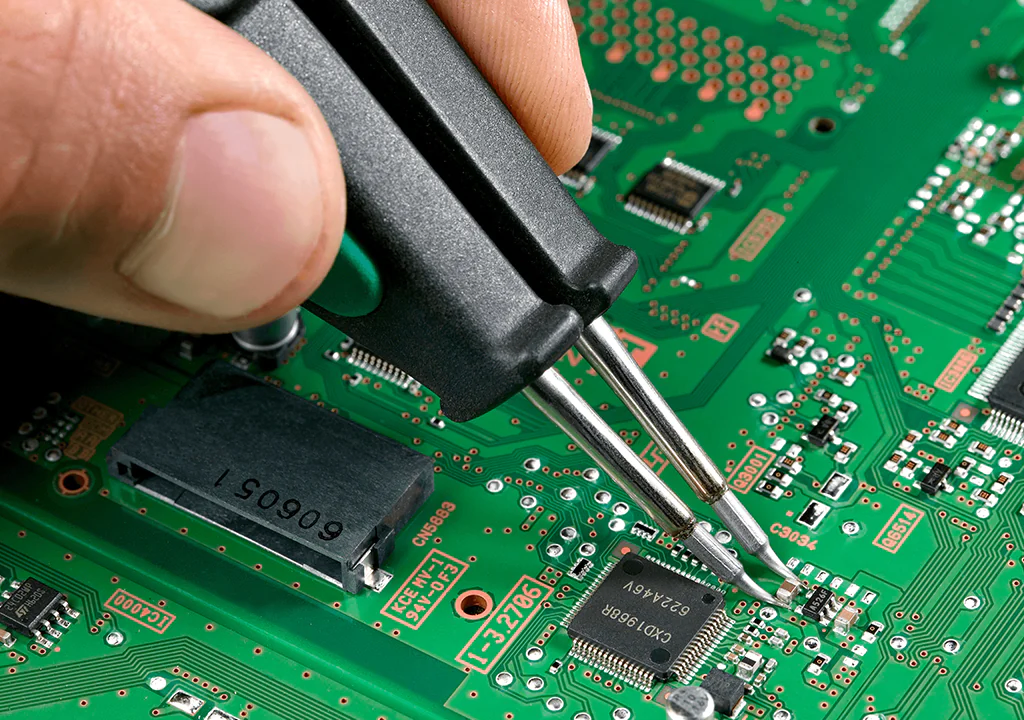
Unlock the World of Electronics: The Foundation to Repair Anything
Diving into the world of electronics repair can seem intimidating, a universe of complex circuits and tiny components. However, the truth is that by understanding a few fundamental concepts, anyone can start diagnosing and repairing their own devices. At Micro Wire, we believe in the power of the circular economy: repair instead of replacing. This guide is your first step towards becoming self-sufficient, saving money, and helping the planet. Let's demystify electronics together.
The Three Pillars of Electricity
Everything in electronics revolves around three fundamental quantities. Think of them as the basic ingredients of any electrical recipe. Understanding them is crucial for any diagnosis.
Voltage (Volts - V)
Voltage is the 'pressure' or force that pushes electrons through a circuit. Imagine a water hose: voltage is the pressure from the tap. Without voltage, there is no flow of electricity.
Current (Amperes - A)
Current is the actual flow of electrons, the 'amount' of electricity passing a point in a given time. In our hose analogy, this would be the water flow rate. It's the current that actually does the work in a component.
Resistance (Ohms - Ω)
Resistance is the opposition to the flow of current. All materials offer some resistance. In the hose, it would be a narrowing that makes it harder for water to pass. Resistance is used to control the amount of current flowing to a component.
Ohm's Law: The Golden Rule of Electronics
These three concepts are interconnected by Ohm's Law, the most important formula in electronics: Voltage (V) = Current (I) x Resistance (R). If you know two of these values, you can always calculate the third. This law is fundamental for calculating necessary components and diagnosing faults in a circuit.
Essential Components on Your Path
When you open any electronic device, you'll find a variety of components. Knowing the most basic ones is the next step in your repair journey.
Resistors
They are used to control the flow of current. You'll find them in almost every circuit to protect more sensitive components by limiting the current that passes through them.
Capacitors
They act like small, rechargeable batteries that store and release energy very quickly. They are crucial for filtering electrical noise, stabilizing voltage, and in timing circuits.
Diodes
These components act as a 'one-way valve' for electricity, allowing current to flow in only one direction. They are essential for converting alternating current (AC) to direct current (DC).
Transistors
Considered the building blocks of modern electronics, transistors can act as switches (turning on/off) or as signal amplifiers. They are the basis of all microchips and processors.
Ready to Start Repairing?
With these essential electronics concepts, you now have the foundation to start looking at a circuit and understanding what's happening. Repair is a journey of continuous learning, but every step makes you more confident and capable.
At Micro Wire, we have all the components, tools, and accessories you need to put this knowledge into practice. Explore our store, start with small projects, and join the repair movement. Your wallet and the environment will thank you.